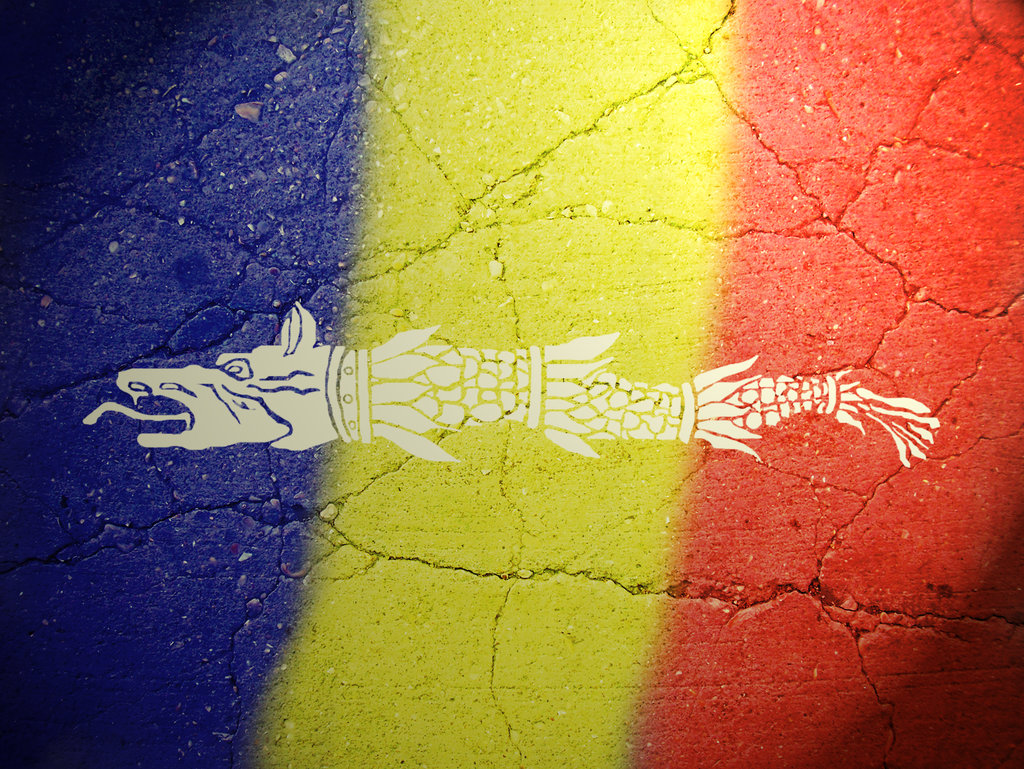
Romania, a unitary national state
The Union of 1859 – the solid foundation of modern Romania
The unification of Moldavia and Wallachia in 1859 was a fundamental act
for the construction of our unitary political edifice and falls within the
the European process of structuring modern nation states, on
the ruins of anachronistic empires on the verge of collapse.
The core of the Romanian unitary national state has existed for 161 years and,
then, historians keep trying to unravel its meanings, to show it
the way of doing it, to reveal its importance. Obviously, from this
In this immense undertaking, the good stands out as predominant.
In other words, it reveals the great advantages gained by Romanians.
through the formation of Romania. However, it is known that not all
Romanians and, especially, not all neighbors enthusiastically welcomed the act
of the union of 1859. There were, as in any human deed, a number of
dissatisfied.
It is obvious that the Habsburg Empire, the Ottoman Empire and even
The Russian Empire viewed the unification of Moldova and Wallachia with concern.
and tried to prevent it. The Austrians and Hungarians (contained in a
Empire that would soon become Austro-Hungarian, i.e. bicephalous) was
they feared that Transylvania might join Romania, which would have been
to their detriment.
The Turks knew that "unity makes strength" and that, therefore, Romania
will quickly break away from its (now formal) dependence on the Sublime Porte. Russia
could not openly oppose the union (he needed
the goodwill of the West and, especially, of France, after its humiliation in
Crimean War), but he knew that, Bessarabia occupied by the Tsars, that is
half of old Moldova, can only look with sympathy and
with hope in Romania.
And in the country or in the Romanian lands there were elements hostile to the union.
a relatively small core of great Moldavian boyars were keenly pursuing
concern about the unionist movement and the shift of power centers to
Bucharest or towards Bucharest.
What will become of Iași's old buildings, of the offices of these
wealthy people and even with their vast estates? The category of boyars
was embarrassed everywhere, especially since the revolutionaries of 1848 were catching
more and more clot, especially since the "Reds" were coming to power, who announced
radical reforms, announced the implementation of the program
revolutionary, among whose points was the abolition of the clique and
the ownership of the peasants.
Who will work the land anymore? Some state officials were also afraid,
who held positions in Iași and even those in Bucharest, aware of
everyone that these functions will no longer be duplicated, because they will no longer
there was a need for two incumbents for the same department.
Some Church leaders were also afraid, because the new wave announced
reforms and in the realm of the vast properties of the monasteries. Spinoasa
was, first of all, the issue of the venerated monasteries in Moldova and
Wallachia (from Romania, after 1859), which sent its fruits
the work of hundreds of thousands of Romanians outside the country, especially in Greece.
Now, Greece was no longer the same as it was in the Middle Ages, when it had come under
the authority of the sultans and when the Romanian lords and hierarchs – remained free
or almost free in their North Danubian lands – with a pure soul
had decided to help Mount Athos, the Holy Places of the East
Also close to other captive Christian settlements.
The Byzantine legacy and the transfer of power from Constantinople,
became Istanbul, north of the Danube ("Byzantium after Byzantium") had forced
morally on the principles and on the Romanian hierarchs to fulfill their mission of
protectors and heads of the Church.
Greece, however, was now a free country (since the beginning of the 16th century).
19th century) and had gained its independence also with the help of the Romanians. In
new conditions, there were no longer reasons like the wealth of the Romanians – who were pursuing
to get out of poverty and synchronize with Europe – to flow into
outside.
However, Greece and the Greek Orthodox Church did not look with favor.
good eyes the union and reign of Cuza, because it led, in
their vision, upon the cessation of Romanian benefactions, which they believed
and they wanted them eternal.
Our Church, however, has understood, to the greatest extent, the new way
of the world and the country strove to instill strong faith in the One
Most High, always prayed to pour out his grace upon the Romanians and Romania.
Finally, within the new deconstructivist historiographic currents,
there are also certain Romanian "analysts" (especially in Iași) - with a vision
ahistorical – criticism of the union of 1859.
For these globalists, internationalists and even neo-Marxists, it would
It would have been better for the new composition of 1859 to exist and remain, if
it had all been done, a federal one, with two countries, two lords, two capitals,
two governments, two legislatures.
Thus, these interpreters say unique of history,
Moldova would have remained Moldova, Iași would have continued to be the capital,
functions would have remained unshaken, wealth and taxes would not have been drained
towards the rapacious Bucharest etc.
If the reservations of the era regarding the 1859 act had their reasons
to exist, these contemporary gibberish are just games of ideas
obsolete. The oppositions of those who lived through the act of 1859 are noted,
recorded and explained by historians.
More difficult to explain from a historiographical point of view are the reservations
some of the aforementioned contemporaries of our act of Union
foundation, which gave impetus to the Great Union.
The temptation to reconstruct history has existed in all eras, but it has not been practiced by professional historians.
The latter know how difficult it is to reconstruct frescoes.
the past as they were and that the fabrication of what was
it's just a free exercise of imagination.
Deconstructivists usually think ahistorically, because they apply
ideas of their times about the historical eras they claim to have
researches and would like the leaders and decision-makers of those eras to have
thought like them, like these improvised demiurges.
Now, you can't make Alexandru Ioan Cuza, Mihail
Kogălniceanu, the Golescu brothers, Ion Ghica, Ion Heliade Rădulescu,
Vasile Alecsandri or Costache Negri to think like Robert
Schuman, Jean Monet or Alcide de Gasperi!
Between them is a century of accumulation and ever-renewed ideals,
of wars that changed the face of the world, of empires that collapsed
and of nations that have been reborn.
How to give 21st century action prescriptions to the living
according to the reality of the 19th century, which was the century of nations and not
of federations, of nation states and not of globalization, of the struggle
of national emancipation and not of regional political and military blocs
and world?
How to transpose ideas that seem valid and valid today to other worlds,
who knew that other ideas were healthy for them? And on the other hand,
it is clear that neither our ideals of a united Europe, which claim
sometimes the dissolution of nations, they don't really stand still and that's all
the strength of individual nations is fully asserted.
This is evident from Brexit, from the policies of countries like the United States
United States, France, Italy, Netherlands, Poland, Hungary, Czech Republic, etc., which
they are increasingly withdrawing into themselves, strengthening their internal institutions and not
are willing to give up their sovereignty.
Unfortunately, such policies also lead to certain trends
authoritarianism, limiting democracy and returning to practices that
seemed to have been abolished long ago, but these are other problems, collateral to the theme
our.
The fathers of the homeland in 1859 knew well that the new Romania was not
neither Great Britain, nor Germany, nor Austria, nor Turkey, that is
our country was not a great power, which other powers could not touch
or fear of hurting her.
Romania was just being built then, from small and insignificant Romanians,
and the fate of this country (which was to house the most numerous people
from southeastern Europe) depended on its strength, on the impression of unity on
which emanated it outward.
The unification model of these painfully divided provinces
of history, it had to be, consequently, a clear and precise one, one of
full integration. When Mihail Kogălniceanu claimed that "union makes
power", the great politician knew what he was saying and was not using a figure of speech.
Durable federations could only be afforded by the big and powerful, the
who dictated the politics of Europe and the world, but they didn't really care either
plans were coming to fruition. The small recent federations, such as Yugoslavia and
Czechoslovakia, were made up of distinct peoples and proved to be
unsustainable.
Austria is made up of a branch of the South Germans, but it is not a
federation proper. Germany is a federation, but it is the engine
Europe and no one disputes its existence. The provinces that were to
formed Romania were not inhabited by distinct and foreign peoples, but by
serious, durable and consistent Romanian majorities.
This is, in the case of Moldova Minor and Wallachia (without
Dobrogea), united in 1859, about absolute, overwhelming majorities. In
Bukovina and Bessarabia, the invading empires had changed much of
their Romanian essence, but they had not managed to destroy our blood
national.
How could they have partially united these countries and provinces, since
Were certain foreign forces just waiting for cracks in the path of unity?
The unifications made under Alexandru Ioan Cuza consisted of centralization.
Therefore, the gentleman's first task was, after obtaining recognition
his double choice, the completion of the Union.
The union was not a union without a single prince, without unique symbols,
without a single government, without a single parliament, without a single
capital, without a single army, without a single judiciary,
without a unified Orthodox church, without a single currency, etc.
Moreover, after Cuza's abdication and until the arrival of the prince
Carol (between February and May 1866), enough voices were heard from
the international arena who demanded the division of the country into two principalities,
as they had been before 1859.
Therefore, the Union of 1859 was done well as it was done, with
order and prudence. It must be studied in schools as such, as the basis of
of the Great Union and all the achievements that, between 1859 and 1918,
led to the implementation of the program of the Romanian Revolution of 1848, to
the modernization of Romanian society and its synchronization with civilization
Western.
History is not a game of chance or an exercise in imagination.
nor should it lead to the recreation of worlds to one's taste.
History is the present of the people who lived in the past, that is, it is
our very life, because we come from those of the past, from them
We descend and carry their "joy and bitterness".
If we know how to know their ideals – as they lived them and not
how we live today's - then we are worthy to carry them
the message further. And the message of those who forged Romania united at
1859 is one of trust and solidity in "my land of glories,
"my country of longing".
Romania is not a great power, safe from dangers, assaults and
attacks on its integrity and fate. The country was not given to us as a right
eternal and immutable gift, but as an edifice resulting from sacrifice, meant to be
defended, refreshed and cared for.
He watched over the fate of Romania and its statehood.
national unity is more relevant than ever, and watchdogs must
be it the Romanians themselves, educated to love their heritage left by
the generation from 1848-1859, urged to build and rebuild
always, to increase her dowry and glory.
Only those who know how to sincerely love their homeland are capable of
understand and respect the homelands of others, for the glory of the whole
humanities.
Speech delivered at the scientific communications session at the Patriarchate Palace dedicated to the anniversary of the Union of the Romanian Principalities by the President of the Romanian Academy, , Acad. Ioan Aurel Pop