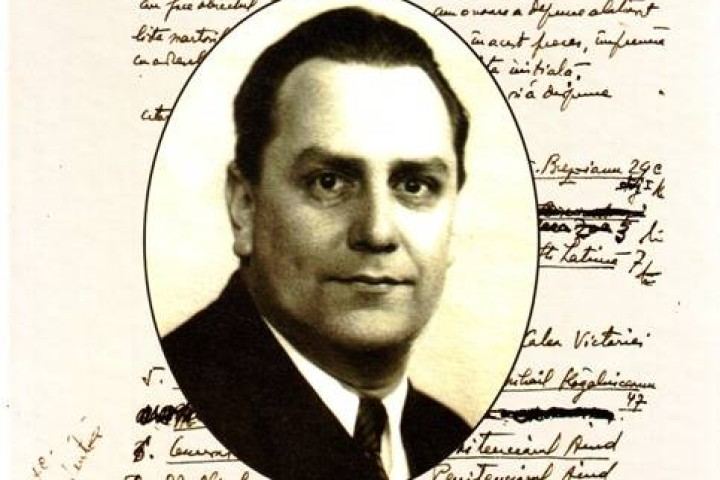
Defining "generation"„
In Mircea Vulcănescu's opinion, the main meanings of the word "generation":
1) in the biological sense, "the word generation means offspring, that is: the totality of immediate descendants from a common author";
2) in a sociological sense, "generation represents a group of people of the same age. In Vulcănescu's opinion, the existence of a social stratification by age is natural, since age difference is the most general framework for conditioning the differences in behavior of members of a community";
3) in a statistical sense, „generation is the equivalent of the average period of natural renewal of the members of a social group, the period of regeneration of a social group”. Mircea Vulcănescu establishes this period as „between 29 and 33 years”;
4) in the historical sense – „a group of people whose unity and social significance come from the fact of their participation in a certain historical event. Historical generation – an attempt to explain the similarity of the style of a certain time through the age identity of those who work in it. The historical generation is the one that fills the framework made possible and formally determined by the statistical generation”;
5) in a psychological sense – „a group of people of about the same age, who feel solidarity in their social manifestations and who attribute this solidarity to their proximity to age. The psychological community resulting from the influence of the same circumstances on consciousnesses in the period of formation”. For Mircea Vulcănescu, „man is constituted in such a way that this mental conformation of his does not consolidate, does not ossify, in a sense, except towards a certain age. It is therefore natural that age, a condition for fixing the mentality, indirectly conditions the degree of influence of a historical event”;
6) in a cultural and political sense: "a group of people whose social manifestations converge or resemble each other; who, that is, feel, believe, know and want about the same things and take identical attitudes towards similar problems. The general spiritual concept of generation postulates the actual identity of the spiritual and political reactions of all people of the same age, in reality it is observed that at all times and in all social groups different spiritual positions and political attitudes coexist";
7) in an economic sense: "a group of people of the same age who compose it especially by the fact of their inclusion or non-inclusion in the existing social hierarchy".