The Roman fort at Hinova
The dry description sounds
like this:
„
RO297 | Hinova | Hinova | Hinova Moesia Inferior
Legionary camp | Date: 270 – 400
Selected: Yes | Criteria:1, 2, 3
Integrity: Fort/quadriburgium is
the part that is not overlapped by another dwelling has been fully surveyed.
Authenticity: Very well preserved,
minor restoration work, high degree of authenticity.”
Or „ […] 26A0032| Hinova village, commune
Hinova (near the border guard post) | Roman fort at Hinova; Period
"late Roman, 3rd-5th century"”
For the press, Hinova is
the place where a treasure was discovered „"fabulous"”
of „"almost five kilograms of gold"”
consisting of 9,639 pieces.
Between
all this dry or flamboyant data makes the site seem awkward, and the work
archaeologist Mișu Davidescu (1930-2019) destined for oblivion. The previous post has
as the main source of information the work „"The Fortress"
"Hinova Roman" – Mișu Davidescu– Sport Turism Publishing House 1989 (very hard to find)
found even among antique dealers).
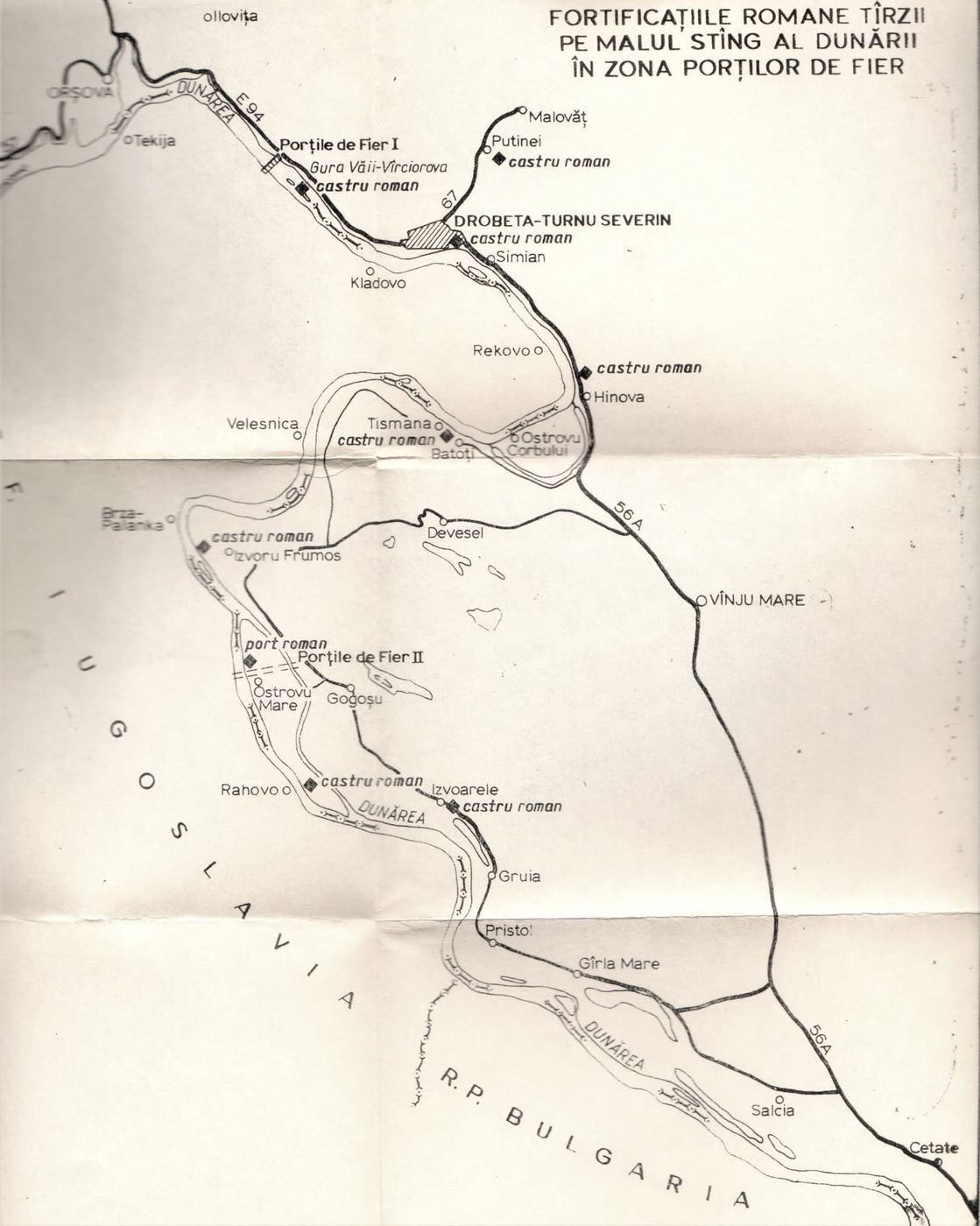
As can be seen from the map presented ("Late Roman Fortifications on the Left Bank
of the Danube in the Iron Gates area"), the Hinova-Drobeta-Turnu Severin area has a
large concentration of Roman forts and remains, delimiting an area of a real
interest for the Roman Empire. The small fortress at Hinova is an integral part
from the Empire's efforts to consolidate and maintain control over the Danube and
access to Dacia Ripensis. The fortifications in the Orșova-Desa limes area
give an idea of the importance given by the imperial administration to this area.
The area was also strongly influenced by Roman colonization, which remained
stable even after 275 AD. The remnant of the Roman element or, better said,
Dacian-Roman presence in the area is undeniable, and Roman rule of the area extends
after the 5th century and even during the time of Emperor Justinian. Even just from
From this point of view, studying the Hinova fortress is of great importance,
proving the continuity of the Dacian-Roman element in the area of Danubian Dacia.
website
archaeologically it was not first known or examined during 1976, the year in
which a vast regional archaeological investigation was carried out related to the construction
hydraulic engineering Iron Gates I and II. It is necessary to recall the first references
written, which we have from a collaborator of Grigore Tocilescu, Pamfil
Polonic, notes followed in 1924 by the discovery of a bronze axe with arms
in cross by Alexandru Bărcăcilă, the 1933 discovery of a cup
with massive foot belonging to the Vinca I culture by Ion Nestor or periegesis
from 1934 by Professor Dumitru Berciu who discovered Neolithic pottery
of the Vinca-Turdaș type. A large series of chance discoveries follows, from
the most diverse, gravitating around "Novac's Furrow" which lead to the research
detail of the site, in 1976.
research
The site begins with the discovery of cremation graves belonging to the late
of the Bronze Age and the "famous" Geto-Dacian/Thracian treasure. The archaeological conclusion
is obvious: the small Roman fortress was built on a flat cremation necropolis from the Bronze Age and the beginning of the Iron Age
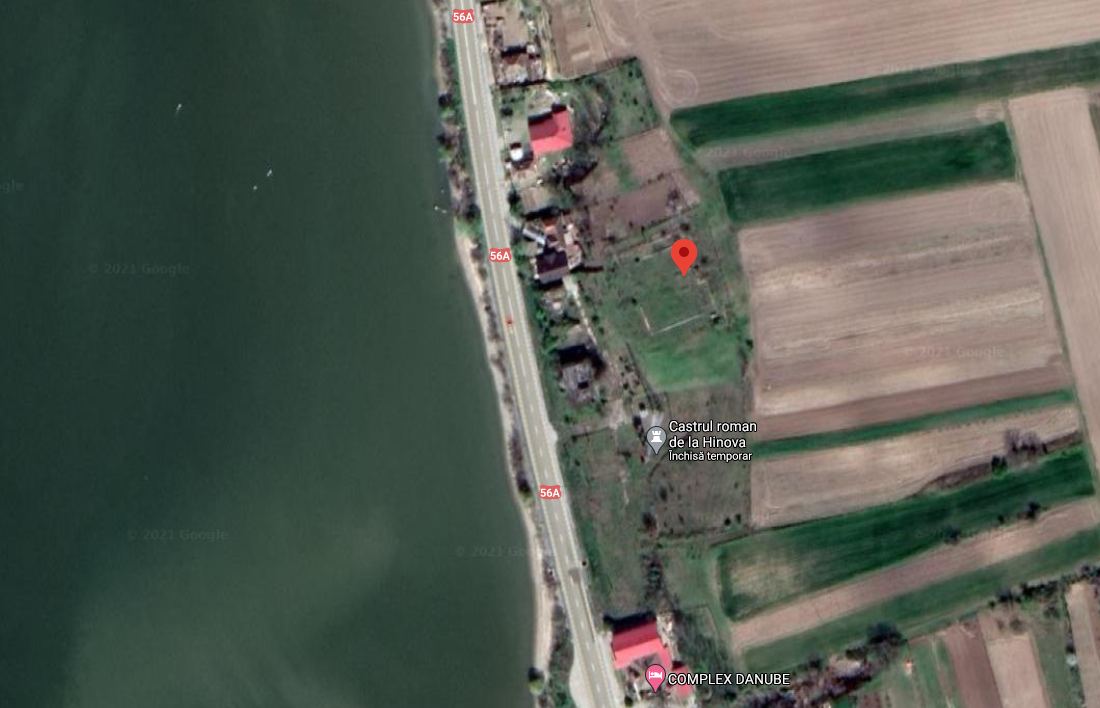
iron. The place is also very well positioned geo-strategically: it is located
at the foot of the hilly spur of the town and has very good visibility both
on the course of the Danube and on the Drobeta Turnu-Severin (upstream), until
at Ostrovul Corbului (downstream) where there was another such camp.
The fortress
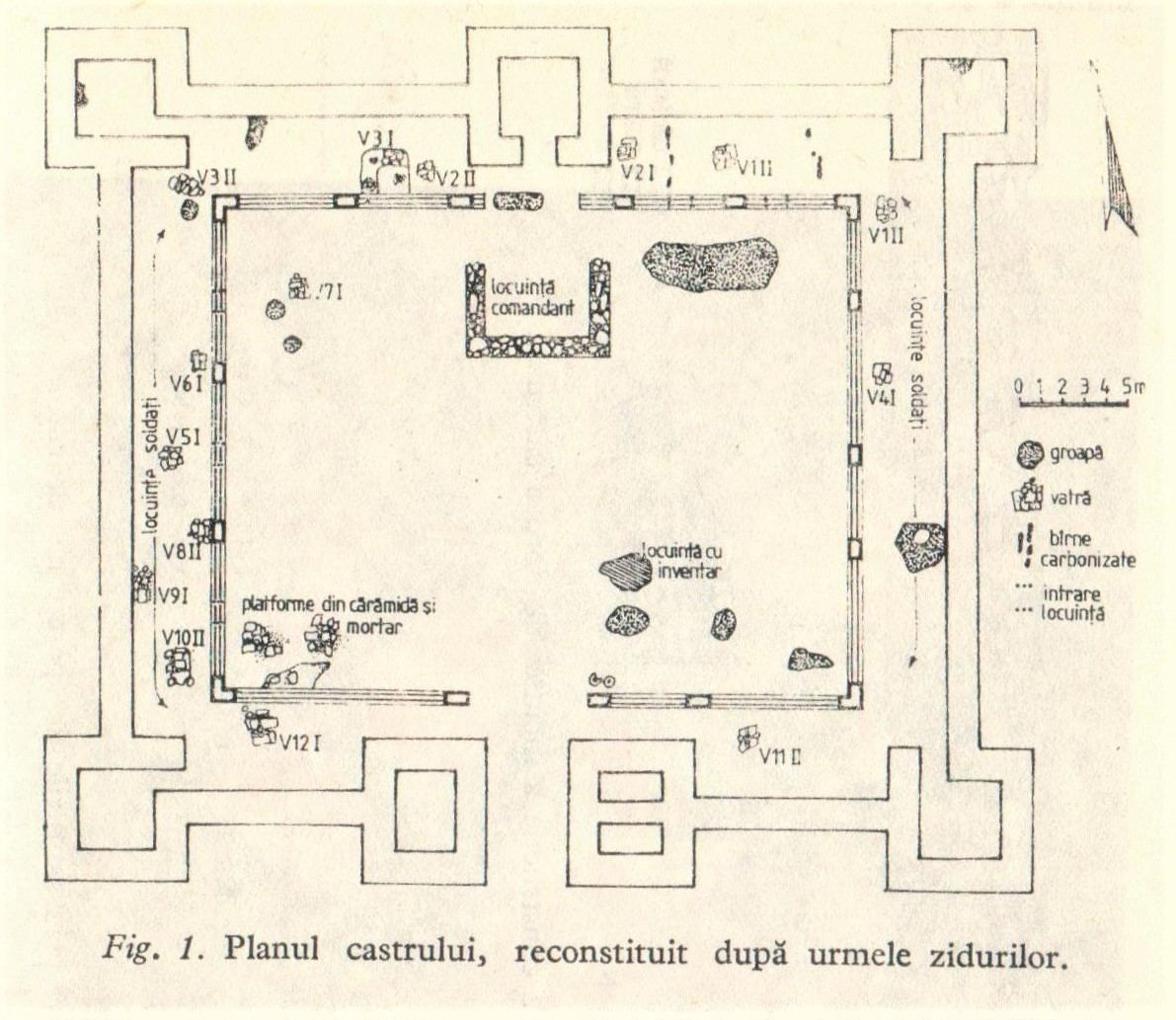
It is rectangular in shape with dimensions of 45.85×39.80m. The defensive wall
It has a thickness ranging between 1.35 m and 1.5 m, encompassing a number of seven towers.
defense and having a height of about 4-6 m. The defense towers have a shape
almost square being embedded in the construction of the defensive wall. The gate of
The access to the camp was most likely made of wood and had an opening of 3.65m.
The material used in construction is predominantly river stone, rarely appearing
carved limestone blocks.
The system
The soldiers' quarters stretched along the defensive walls. The only dwelling
individualized is the commander's apartment (according to the fibula with heads of
onion discovered here), which is inside the camp (5m x3.45m). Examining
the remains and the number of supporting pillars, it is estimated that there were 16 rooms-dwellings
of the soldiers and the camp staff. The dwellings served both the soldiers,
as well as their families and had a useful area of approximately 37 square meters.
Each dwelling had one or two fireplaces. It is possible that some of the
these rooms may have functioned only as weapons depots. The towers were, of course,
also used as homes or craft workshops.
Court
The interior had approximately 1220 m2 (total area of the fort is 1825m2) and housed,
probably, outside the commander's house, a food warehouse, as well as
and animal shelters.
Conformable
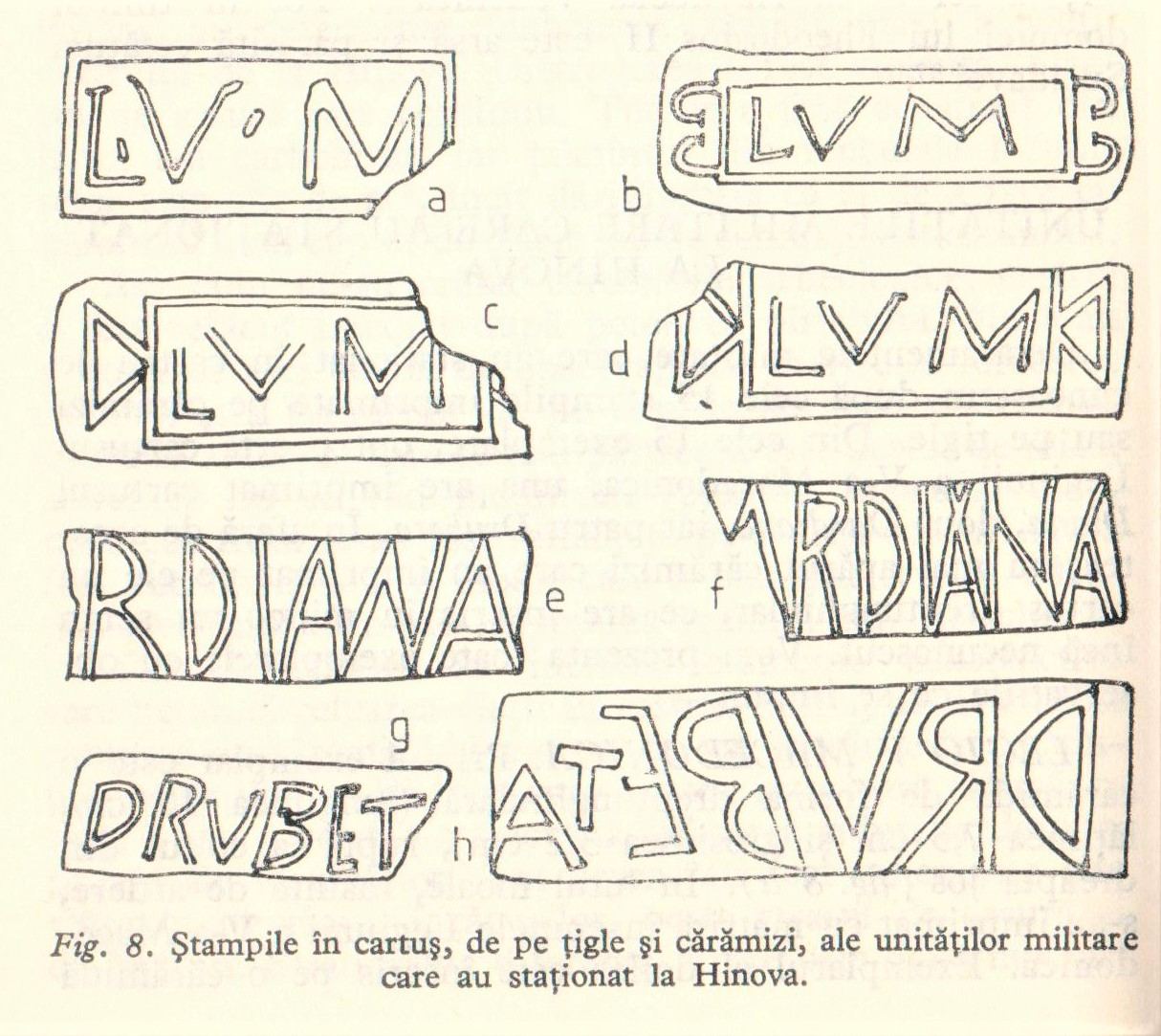
the discoveries of some bricks, having shaped cartridges tabula ansata, we can say that this camp belonged to the Legion of
Va Macedonica. Other cartouches tell the rest of the story: DARDIANA –Da(ciae)
R(ipensis) DIANA (Zanes), DRVBETA. It is obvious that the existence of a fortress as
small ones were made through the contribution of important neighboring camps (Drobeta). .
In
During the archaeological excavations, many ceramic objects were discovered.
very good quality (glazed like those from Simian), pots-jars,
glazed bowls and jugs, glazed or not, amphorae with round or elongated bodies,
glazed opaites (of the 60 discovered, 52 are glazed) and numerous
spindle whorls (65 specimens already discovered). The life of the fortress is also shown by
discovery of iron tools (scythe, hoe, pickaxe, ax, knives – over 50
(e.g., bridle links, harpoons and fishing hooks). Of the present armament
only spear, lance and arrowheads have been discovered, such as
and knives, slingshot projectiles and a shield umbo. But the discoveries are not limited to
here, the different coins, cultic and even artistic objects completing
this archaeological treasure of the late Roman era.
Importance
this archaeological site, as I stated in the prologue, is not in the "sensational"„
golden treasure (which deserves increased attention, but in another context), but the fact
that, in this case, we have many elements that can recreate the image of a
the average Roman camp, the life of the soldiers and the camp community, as well as the
the remnant of the Dacian-Roman presence in the defensive positions of the empire, long after
Aurelian retreat.